Snorkeling Oahu: Best Spots, Tours, and Beginner Tips
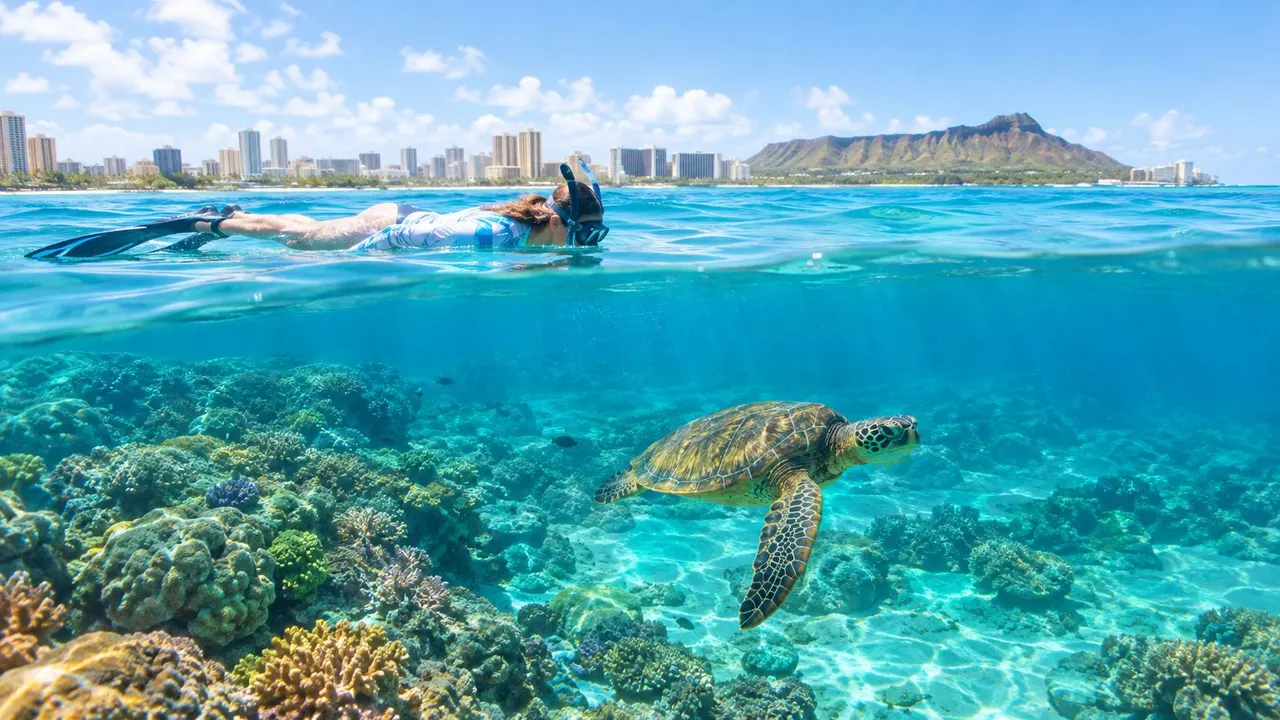
You're in Waikiki, checking tomorrow's forecast while a family member asks the question every first-time visitor asks: where should we snorkel on Oahu, and will the water be comfortable? The answer isn't a list of beaches. It depends on the swimmer, the day's conditions, the time you enter, and whether you want to manage the details yourself or have a captain and guide handle them.
I've run hundreds of trips out of Kewalo Basin, and the same pattern holds. A sheltered shore reef can be perfect for one family and frustrating for another, while a boat trip can turn a nervous first attempt into an easy morning. This guide matches the site and experience to the person in the water, with practical advice on safety, turtles, seasonal conditions, gear, and choosing a tour.
What Snorkeling in Oahu Actually Looks Like
A Waikiki morning often starts at a gentle pace. The boat leaves Kewalo Basin, the skyline sits behind you, and the first-time snorkeler on deck is checking a mask seal for the third time. Once the boat clears the harbor, the water can look glassy, but the decision that matters is still ahead: where will you snorkel, what are conditions doing today, and should you go independently or with a guide?
Those choices matter more than a famous beach name. A confident swimmer with a rental car may enjoy a rocky North Shore entry in summer. A multigenerational family may have a much better day in protected water with flotation, fitted gear, and someone watching the ocean while the children swim. A turtle-focused visitor may be better served by a boat-access reef than by spending the morning hoping an animal appears near shore.
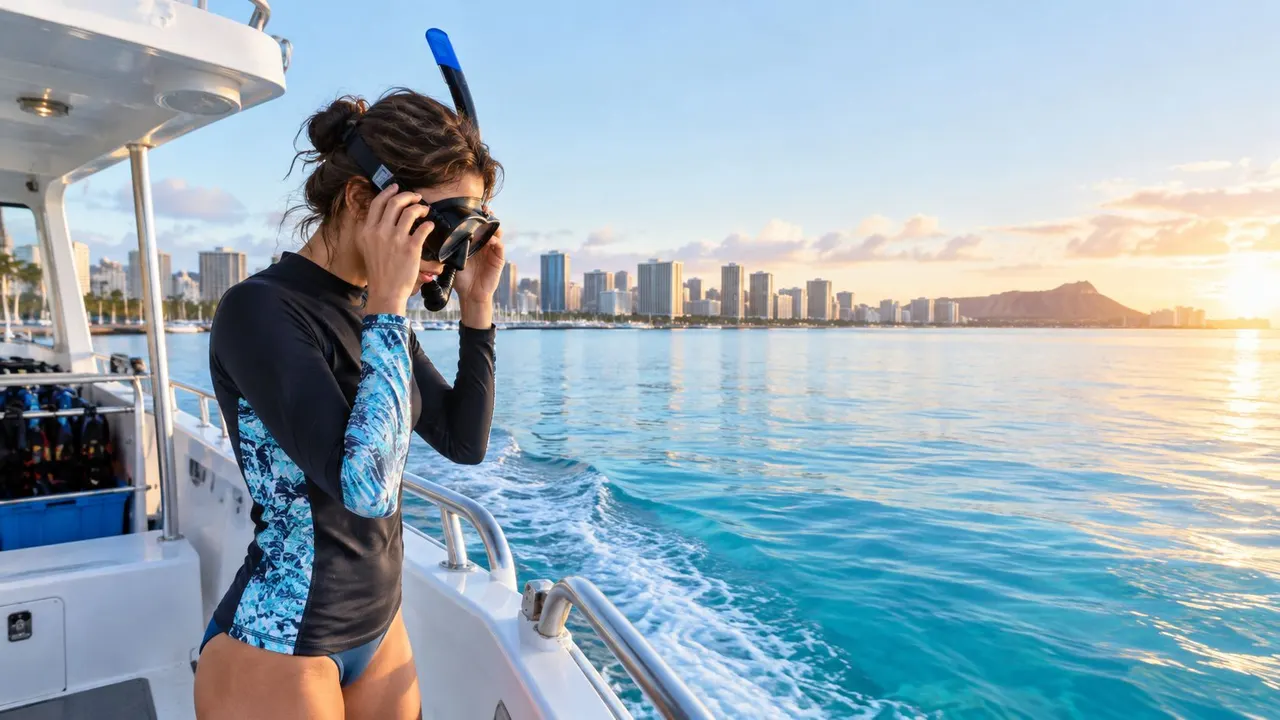
The most useful snorkeling Oahu plan begins with fit rather than reputation. Decide whether your priority is calm water, easy access, turtles, reef fish, or a low-effort family outing. Then check the ocean that morning, because a site that worked beautifully yesterday may be a poor choice after wind, swell, or runoff.
For visitors staying in Waikiki, a boat departure from Kewalo Basin also removes much of the uncertainty around parking, beach entry, and locating the active part of the reef. A practical Oahu snorkeling overview can help you compare that option with a beach day before you commit.
Captain's view: The best snorkel spot is the one where you can stay relaxed, conserve energy, and observe marine life without chasing it.
How to Read Oahu's Ocean Before You Get In
A beach can look inviting while the water beyond the reef is moving hard. Before choosing a snorkeling Oahu site, watch the ocean for several minutes and assess the people who will enter it. Hawaiʻi Ocean Safety identifies high surf, strong winds, heavy shorebreak, and strong currents as principal adverse conditions. Morning sessions often offer clearer visibility, calmer water, and more active marine life. Read the official Hawaiʻi snorkeling safety guidance before treating any beach as suitable. For a site-by-site comparison of changing conditions around the island, review this Oahu snorkeling conditions overview.
Use a repeatable go-or-no-go sequence
Start at the shoreline. Watch where waves break, whether the shorebreak reaches farther up the beach, and whether swimmers drift sideways between sets. A calm-looking entry can hide a strong channel beyond the reef, so the view from the parking lot is not enough.
Check official beach and surf information, read posted signs, and ask a lifeguard when one is present. Explain if your group includes children, older adults, or first-time snorkelers. Water that suits a strong ocean swimmer may still be a poor choice for someone who tires quickly or lacks confidence in open water.
Wind can change the outing after you enter. Morning water is often clearer and less disturbed, while later wind can reduce visibility and make the return swim harder. If conditions deteriorate, leave early. Finishing the original plan is never the priority.
Test the person and the equipment
On the beach, confirm that the mask seals, the fins fit securely, and the snorkel is unobstructed. Anyone who cannot breathe comfortably through the snorkel before entering is unlikely to become comfortable after current carries them away from shore.
Use a buddy system. Each partner should know the other's location, watch for fatigue or confusion, and be ready to summon help if equipment fails. Keep off coral and avoid standing on it. Excessive finning stirs sediment, wastes energy, and reduces visibility.
Dizziness, disorientation, or a headache means removing the equipment and exiting safely. These symptoms can indicate carbon-dioxide buildup in the breathing apparatus. First-time snorkelers should choose shallow, protected water and use flotation when appropriate. If the sea worsens, cancel the swim.
Oahu's Best Snorkeling Spots by Swimmer Type
Oahu's signature sites serve different swimmers. Hanauma Bay is the structured shore option, Turtle Canyons is the boat choice for visitors focused on honu, Electric Beach suits stronger swimmers who understand current risk, and North Shore sites work best when summer conditions have settled.
| Site | Access | Best For | Watch Out For |
|---|---|---|---|
| Hanauma Bay | Shore entry within a managed preserve | First-timers and families wanting a protected reef setting | Reservations, crowds, reef contact, and changing conditions |
| Turtle Canyons | Boat access from Waikiki | Turtle-focused visitors and swimmers who prefer guided entry | Open-water comfort and responsible wildlife viewing |
| Electric Beach | Shore entry near a power plant outfall | Experienced swimmers seeking fish activity | Currents, boat traffic, and a less forgiving entry |
| Waimea, Shark's Cove, and Three Tables | North Shore beach and rocky entries | Confident swimmers visiting in calmer summer conditions | Winter surf, sharp rocks, and limited tolerance for mistakes |
Hanauma Bay for structure and a sheltered setting
Hanauma Bay is an Oʻahu Marine Life Conservation District. It's open Wednesday through Sunday, with entry allowed from 6:45 a.m. to 1:30 p.m., and fishing, taking marine life, and operating watercraft are prohibited under the area's rules. Check the Hanauma Bay Marine Life Conservation District regulations before planning the visit.
It's a strong fit for a first-time snorkeler who wants a defined beach environment and a broad, shallow reef. It isn't automatically the easiest choice for a family, though. Access management, the walk from the entrance, gear logistics, and crowds can add friction, especially if a child loses confidence after entering.
Turtle Canyons for a focused wildlife outing
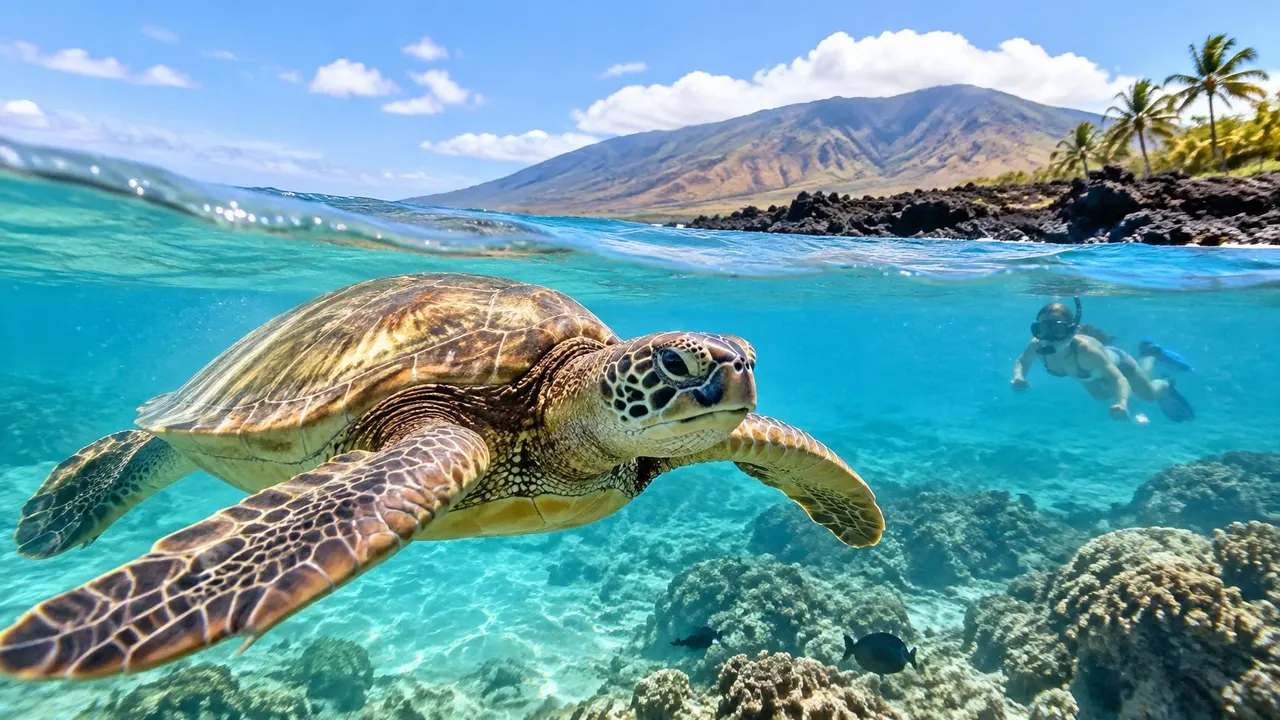
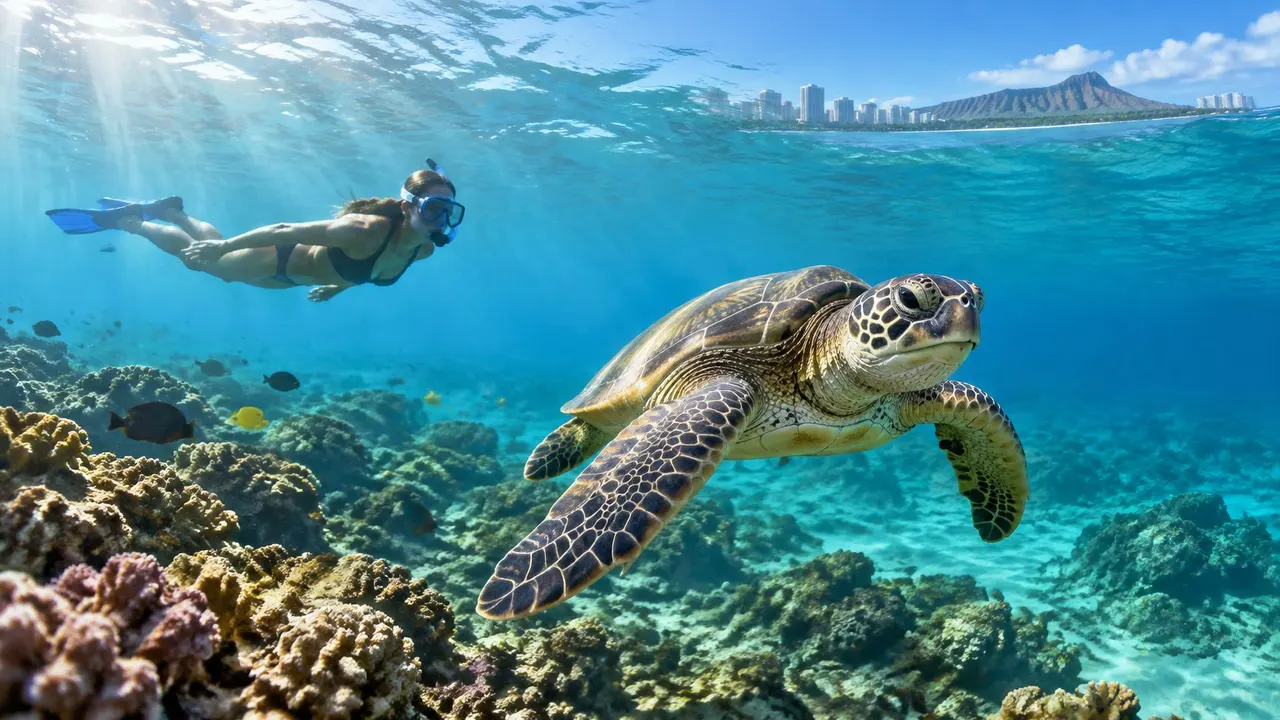
Turtle Canyons is reached by boat and makes sense when turtles are the main objective. You skip the uncertainty of a beach entry and reach a reef where guides can position the group without asking swimmers to cover a large distance under their own power.
Electric Beach and the North Shore
Electric Beach can offer rewarding fish viewing, but it demands better judgment around currents and entry conditions. I recommend it to capable ocean swimmers, not to someone whose only water experience is a calm hotel pool.
The North Shore's Waimea, Shark's Cove, and Three Tables can be excellent summer choices for a rental-car itinerary. They're not interchangeable, and none should be treated casually during winter surf. Rocky entries, surge, and limited room for error make these sites a poor match for nervous beginners.
Why a Guided Snorkel Tour Changes the Experience
A guided boat trip doesn't make the ocean risk-free. It changes how much of the day's uncertainty you have to solve yourself.
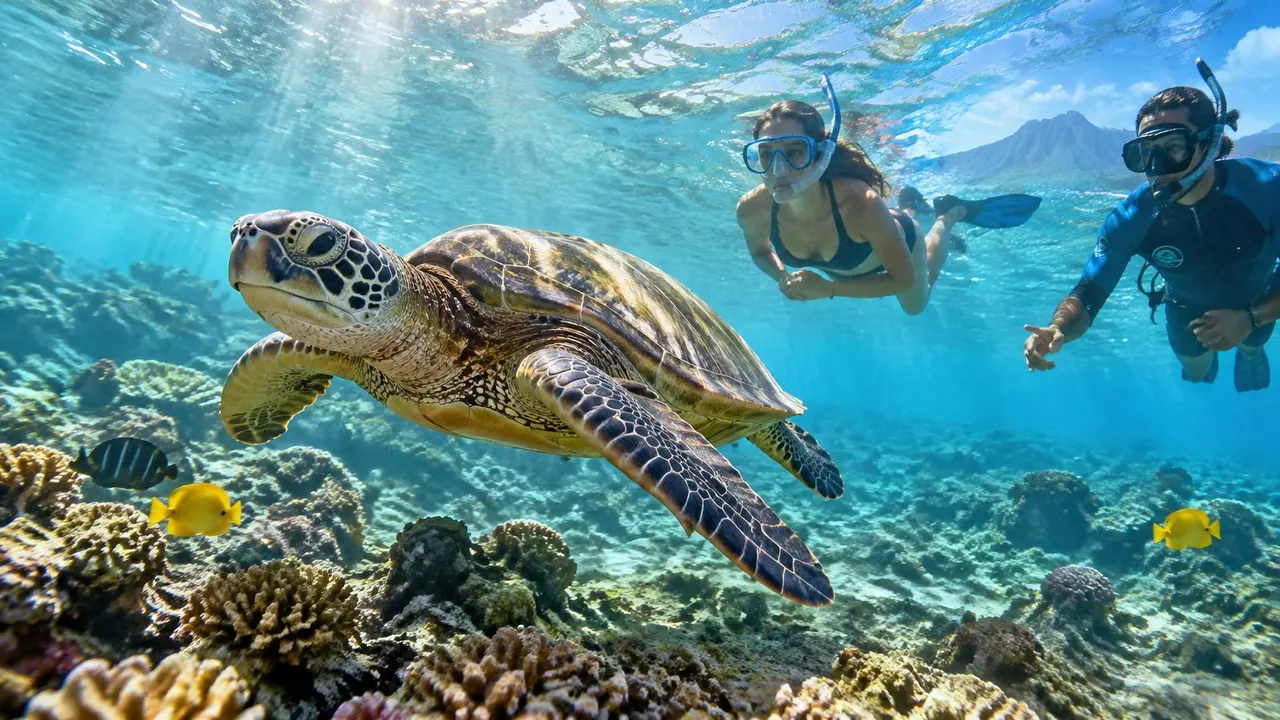
The captain can choose a workable location based on the morning's conditions rather than sending you to a beach that looked good in an old travel post. In-water guides can stay close to nervous swimmers, demonstrate breathing and kicking, and help a family maintain a comfortable formation. Properly fitted masks and fins remove a common source of frustration, while flotation lets a beginner rest without spending the entire outing fighting to stay on the surface.
What the boat adds
A beach snorkel usually asks you to handle four jobs at once: select the entry, judge the current, carry and fit the equipment, and find marine life while supervising your group. A good crew separates those tasks.
The captain handles navigation and site selection. The guide watches the people in the water. The equipment is checked before entry. The group can conserve energy instead of swimming hard just to reach the reef.
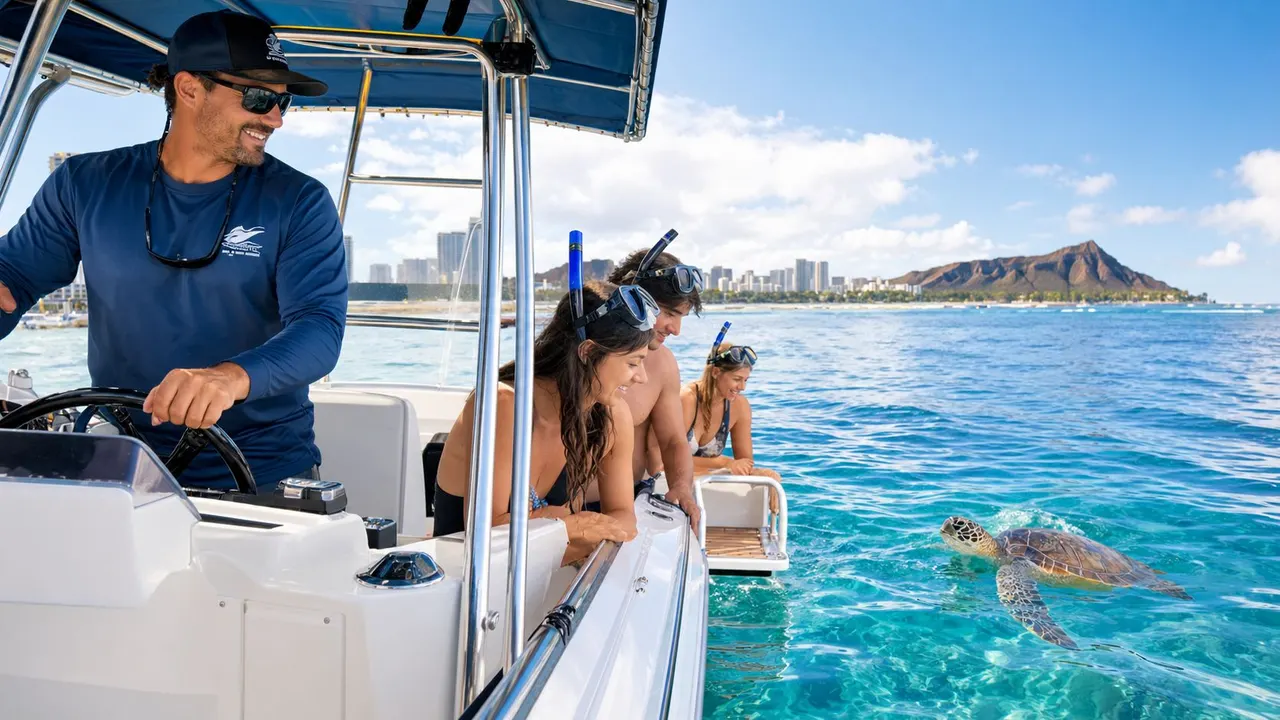
For a concrete example, Living Ocean Tours' Turtle Canyons Snorkel Excursion is a 2-hour guided boat outing from the Waikiki area. The company reports roughly a 95% success rate finding Hawaiian green sea turtles on trips departing daily from Kewalo Basin Boat Harbor, adjacent to Waikiki Beach, according to its Oahu snorkeling guide. That's a company-reported figure, not a guarantee for any individual departure, and responsible viewing still matters when turtles are present.
The 2.5-hour Deluxe Waikiki Snorkel and Wildlife Cruise is a different fit. It combines reef snorkeling with a waterslide, water trampoline, and lily pad, giving families and mixed-ability groups more ways to enjoy the boat. Visitors comparing operators can also consider Snorkel Turtle Canyon, a great alternative for a turtle-focused outing.
If you're comparing the available local operators, Living Ocean Tours' Honolulu snorkel company information lays out its guided approach and departure details.
Swimming With Turtles the Right Way
A turtle swimming toward you doesn't give you permission to move closer. It gives you a chance to hold position and let the animal choose the encounter.
NOAA Fisheries and Hawaiʻi DLNR recommend a minimum viewing distance of 10 feet, or 3 meters, from Hawaiian green sea turtles in the water and on land. They also warn against touching, chasing, feeding, surrounding, or riding turtles, because those actions can disturb protected wildlife under Hawaiʻi law. The NOAA marine wildlife viewing guidelines provide the practical standard.
Turn the distance rule into behavior
If a honu approaches, stop kicking and keep your hands close to your body. Don't swim backward into another person, and don't pivot around the turtle to get a better photograph. Let it pass, and keep the route to the surface open.
At a cleaning station with several boats, the responsible choice may be to observe from the edge or leave altogether. A turtle can't choose a low-stress path when snorkelers form a ring around it. Guides should place the group on one side of the animal, keep the observation brief, and use camera zoom instead of closing the gap.
Hawaiian green turtles were seriously depleted by overharvesting during the 1950s through the early 1970s. Hawaii protected the species in 1974, and NOAA listed it as threatened under the U.S. Endangered Species Act in 1978. Nesting populations have since increased by approximately 5% per year over the last two decades, with almost 500 females nesting annually, compared with 67 nesting turtles recorded in 1973, as described in NOAA's sea turtle recovery message.
That recovery is why “getting close” is the wrong measure of a successful turtle snorkel. A better encounter leaves the turtle's behavior unchanged.
For families, give children a visible boundary before entering. A parent or surface observer can watch the group while the children float, rather than trying to correct distance after someone has already chased an animal. The Hawaiʻi DLNR turtle guidance also helps explain why a legal minimum should be treated as a floor, not a target for approaching.
Visitors who want more background on turtle encounters can review responsible sea turtle viewing on Oahu before booking.
Gear, Packing, and What the Day Actually Feels Like
Most guided tours provide the core equipment, including a mask, snorkel, fins, and flotation support. Your job is to tell the crew the truth about your swimming ability and comfort level, because a properly adjusted setup starts with an honest conversation.
Wear a rashguard over sunscreen when possible. It reduces the amount of sunscreen entering the water and protects your shoulders during a long surface session. Bring reef-conscious sunscreen, a towel, a dry bag for valuables, and secure footwear for the boat. Reef shoes can help on some rocky beach approaches, but they aren't a substitute for good footing or sensible site selection, and they shouldn't be worn as a reason to stand on coral.
Prepare for the boat entry
First-time guests often imagine a dramatic jump. On a suitable guided departure, the entry is usually controlled. You'll listen to a briefing, secure your mask and fins, and step from a swim step into the water with the crew nearby. A guide can help you settle your breathing before the group moves away from the boat.
Motion sickness deserves a place in the plan. If you're prone to it, ask the operator about preparation before departure and avoid arriving dehydrated or overly full. Keep personal medication in its original packaging and follow medical advice.
A dry bag protects phones and wallets, but don't bring more onto the boat than you need. The Oahu snorkeling packing list is useful for checking the small details that are easy to overlook when you're leaving a Waikiki hotel before breakfast.
Practical rule: A comfortable snorkeler observes more wildlife because they spend less attention fighting their mask, fins, buoyancy, or breathing.
When to Go for Clear Water, Calm Seas, and Wildlife
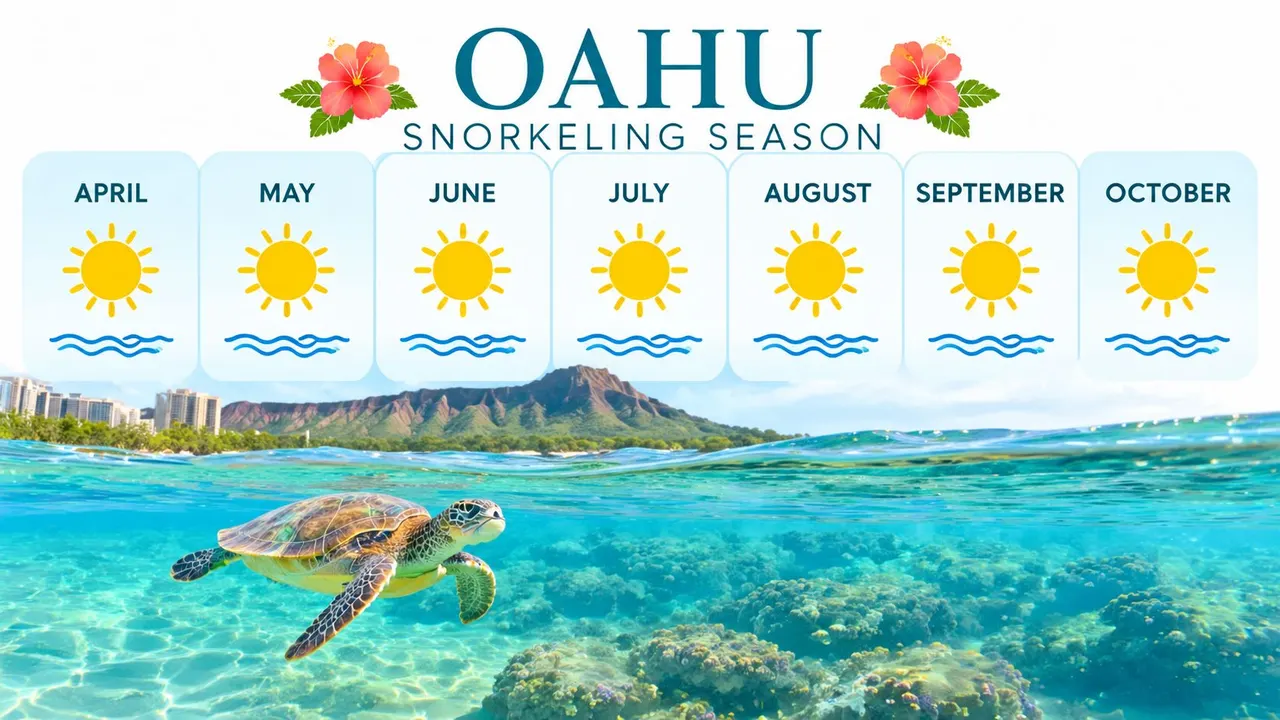
For easy south-shore snorkeling, the calmer April through October window is usually the most forgiving planning period around Waikiki. In winter, from November through March, North Shore surf can make beach snorkeling unsuitable, so visitors often shift toward protected south-shore water or boat-access sites such as Turtle Canyons.
Morning remains the dependable daily choice. Wind and surface chop often build later, and early water commonly offers better visibility and a calmer entry. That applies whether you're visiting a preserve, walking into a beach, or boarding at Kewalo Basin.
Plan around the wildlife you want
Turtle-focused visitors should book Turtle Canyons in advance during winter and holiday periods, when demand and weather-related flexibility can narrow your options. Families choosing the Deluxe Cruise should look at earlier morning departures if they want lighter crowds and a more relaxed start.
Humpback whales are a seasonal possibility from December through April. Snorkeling and whale watching are different activities, so don't treat a whale sighting as part of a snorkel guarantee. Visitors who want to dedicate time to whales can review the Living Ocean Tours whale watch tour.
Hanauma Bay requires more calendar discipline than an open beach. In 2024, the preserve recorded 400,776 visitors, including 228,848 reservations, or 57%, and 170,928 walk-ins, or 43%, according to the Hanauma Bay historical record. Those figures show why access planning is part of the experience rather than an afterthought.
Choose the date around your swimmer profile. Summer opens more North Shore possibilities for confident swimmers. Winter favors protected water and guided flexibility. Any season can produce a poor outing if wind, surf, visibility, runoff, or fatigue make the entry unsuitable.
Booking Checklist and Common Questions
Book direct with the operator, confirm the morning departure, ask what marine-life and ocean conditions look like that day, and tell the crew that you're bringing first-time snorkelers. That lets them prepare appropriate equipment and explain the entry before you arrive.
Can non-swimmers join a snorkel tour? Some can join the boat without entering the water, but policies vary. Ask before booking, and don't describe someone as a swimmer if they can't comfortably breathe, float, and follow instructions in open water.
How young is too young for children? There isn't one universal answer. Consider the child's comfort with flotation, boat movement, noise, sun, and new equipment, then confirm the operator's age policy directly.
What if someone gets seasick or anxious? Tell the crew before departure, stay near the guide, and treat an early exit as a successful safety decision. Nobody earns extra credit for forcing a snorkel session after nausea, panic, or fatigue begins.
Living Ocean Tours offers guided Waikiki snorkeling from Kewalo Basin, including turtle-focused trips and a family-friendly wildlife cruise with flotation and water activities. Visit Living Ocean Tours to choose the departure that fits your swimmers, dates, and comfort level.