Snorkeling Hawaii Oahu: Best Sites, Tours & Safety Guide
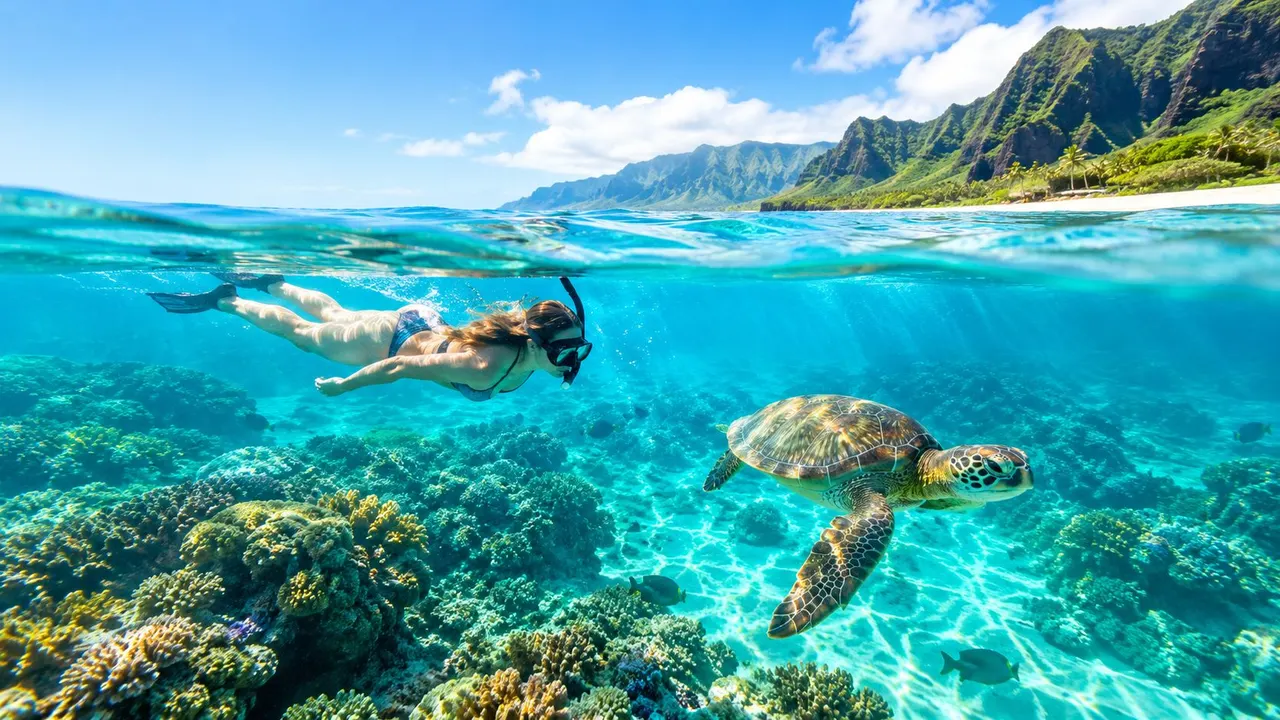
Mornings are typically the calmest, most beginner-friendly snorkeling windows on Oahu, especially along the south and west shores from May through October. During these periods, visibility and water conditions are often at their best, but the right choice still depends on what the ocean is doing that morning.
You've probably got a beach saved, a rental car reserved, and a family member asking whether today is a good day to get in the water. On Oahu, that answer can change between breakfast and lunchtime. A calm south-shore bay may be comfortable for a first-time snorkeler while a north-facing beach is already receiving powerful swell.
The practical way to plan snorkeling Hawaii Oahu is to choose the shore that matches your group, check conditions before leaving, and keep a backup plan. That approach works better than treating a famous beach as automatically safe or assuming a sunny forecast guarantees clear water.
Why Snorkeling in Hawaii Oahu Feels Different
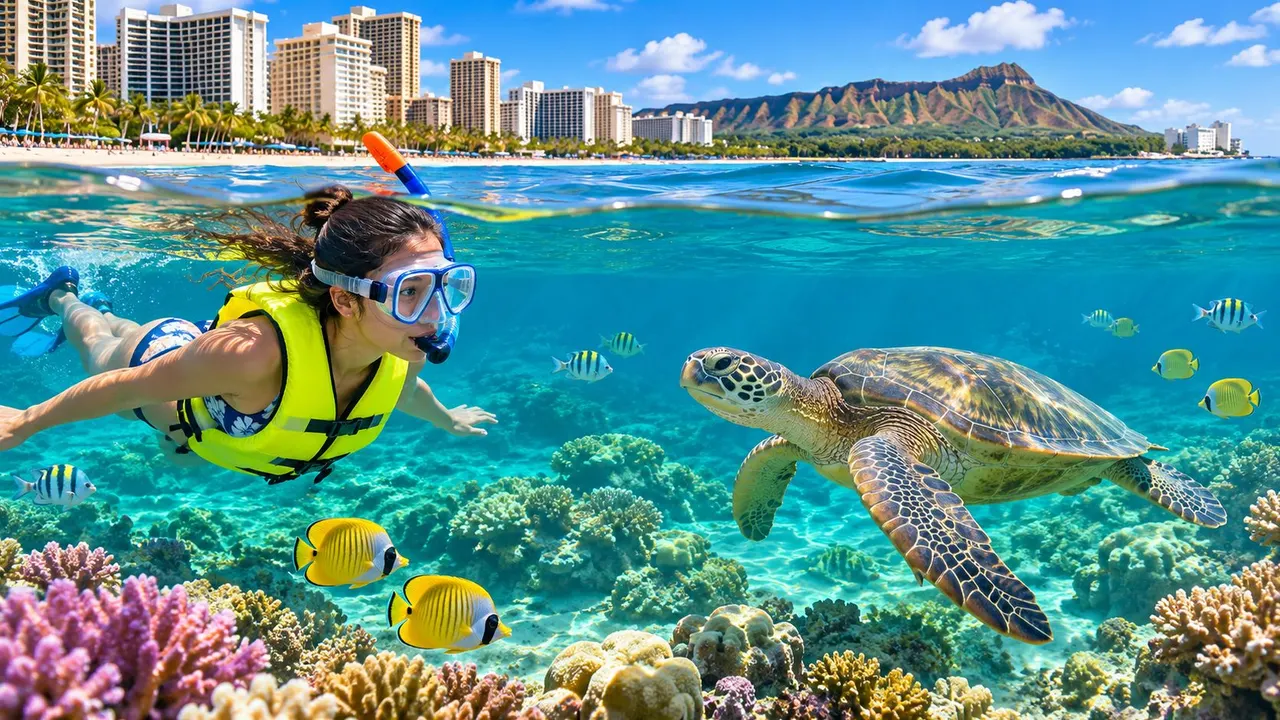
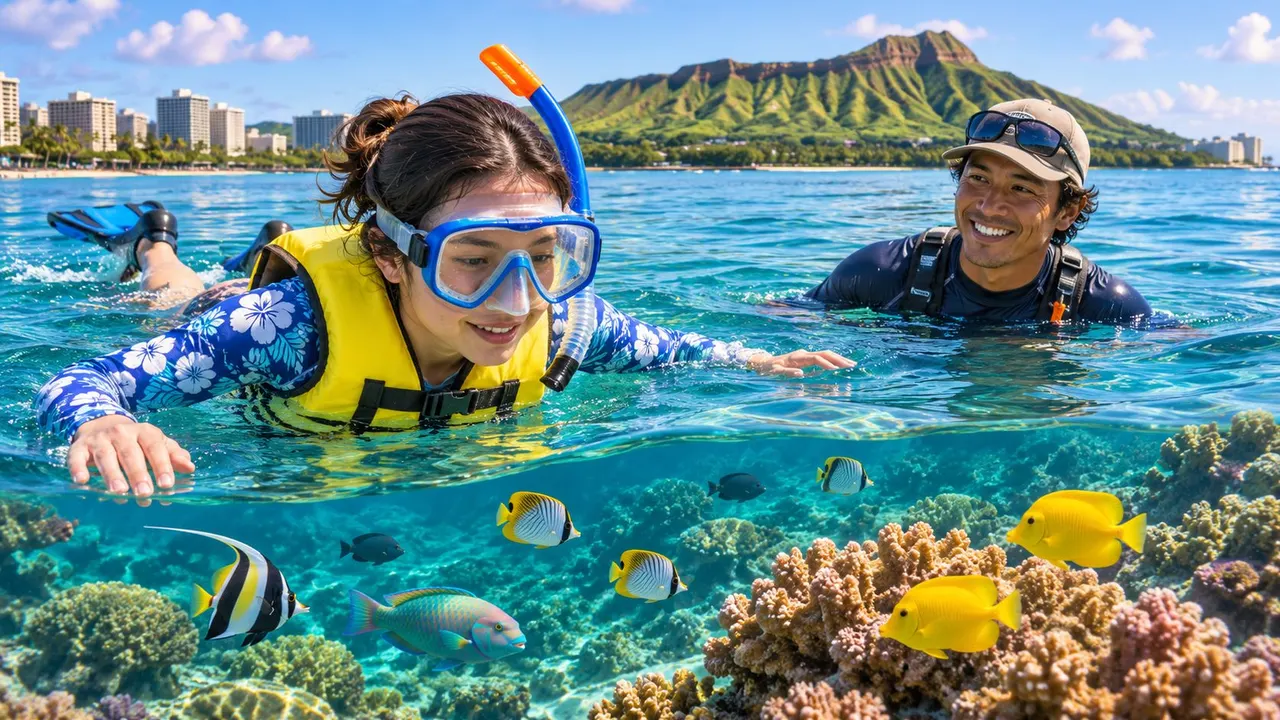
At sunrise, the south shore can look almost still. Waikiki's coastline catches the first light, the surface settles into small ripples, and swimmers can see reef fish moving across the shallows before the afternoon wind arrives. A family that feels nervous on the beach often relaxes quickly once a guide demonstrates how to clear a mask, breathe through a snorkel, and float without kicking the reef.
Oahu draws beginners because it combines accessible beaches, protected coves, nearby facilities, and boat departures close to Waikiki. You don't need to commit to a remote coastline to see colorful reef fish or encounter a Hawaiian green sea turtle. The island also offers more demanding shore entries and offshore reefs for confident swimmers, so groups with different abilities can choose different experiences without leaving Oahu.
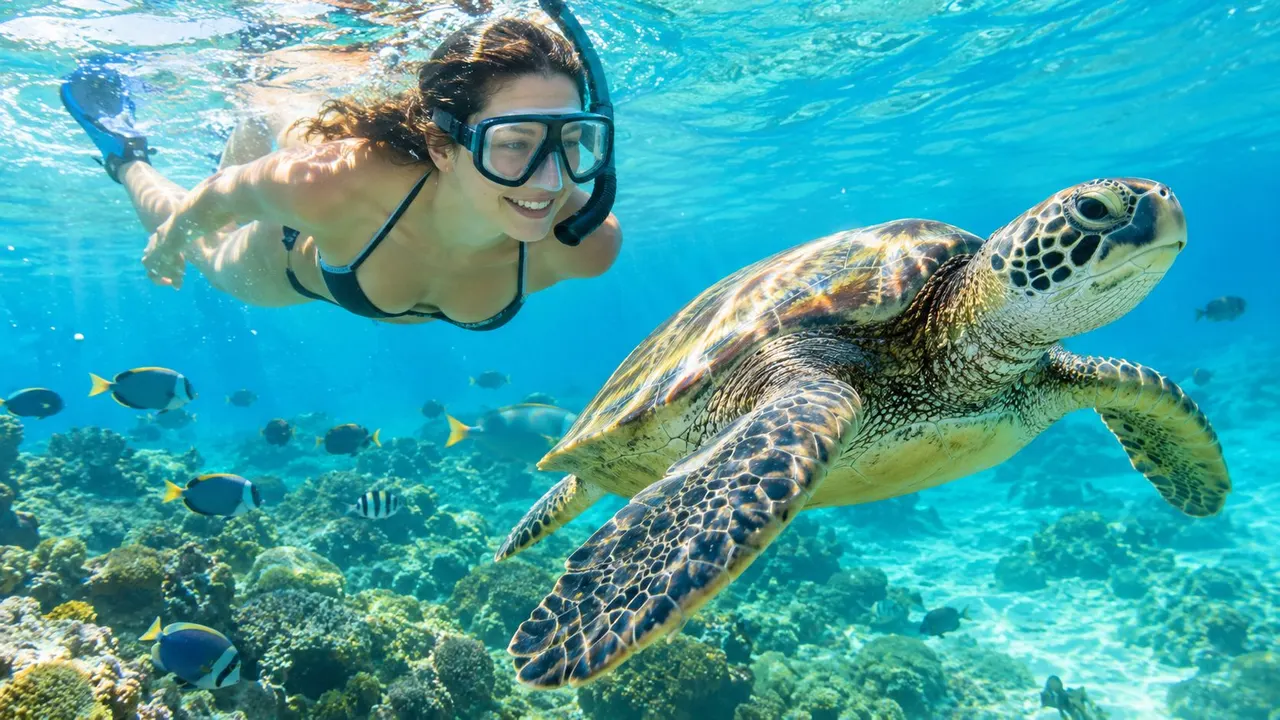
The reef is close, but conditions still lead
Hanauma Bay shows how quickly popularity can change a marine site. During the 1980s, the bay reportedly received as many as 10,000 visitors per day, or about 3 million annually. Conservation rules later reduced usage to about 3,000 visitors daily, roughly 1 million a year, a shift documented in this overview of Hawaiian coral reef management.
That history matters because Oahu snorkeling isn't just about finding the bluest water. It's about accessing a living reef without overwhelming it. Hanauma Bay remains widely recognized as Oahu's premier snorkeling area, but regulated entry and daily limits illustrate why responsible access matters at high-use marine sites.
Oahu's reefs also support a substantial visitor economy. About 3 million snorkelers enjoy Hawaiian reefs every year, and more than 80% of Hawaii visitors participate in coastal or marine recreation during their stay. Nearshore reefs generate about $800 million in gross revenues annually, while one assessment identified more than 100 dive and snorkeling operators earning between $50 million and $60 million per year. The Hawaii marine recreation economic assessment also recorded annual snorkel-dive totals ranging from 28,000 to 100,000 at individual Oahu marine protected-area sites.
Practical rule: Pick the safest clear-water option available that day, not the beach with the most dramatic reputation.
The reward is a close view of Hawaiian reef life without needing advanced diving skills. The trade-off is that popular sites require patience, environmental awareness, and the willingness to turn around when the ocean changes. For a broader look at species and habitats, explore this guide to Oahu marine life.
How to Decide If Today Is a Good Day for Snorkeling
The first question isn't “Which beach is best?” It's “Should anyone in my group enter the water today?” Official Hawaii guidance says more visitors drown while snorkeling than during any other activity, so a same-day decision deserves more attention than a calendar-based itinerary. Check the ocean before you load the car, and check it again when you arrive.
Use a morning go or no-go routine
Start with the official Hawaii snorkeling safety guidance, then look at the beach itself. Morning is usually preferable because winds are lighter, visibility is better, and marine life is often more active. High surf, strong winds, heavy shorebreak, and strong currents are reasons to skip the entry or change locations.
Use this sequence:
- Check the shore break. If waves are folding directly onto the entry area, beginners can lose footing before they even reach the reef.
- Watch the water for several minutes. Look for channels where foam and floating debris move steadily away from shore. That movement can indicate a current.
- Ask the lifeguard. A lifeguard's local reading is more useful than a generic weather app, particularly when conditions differ around the island.
- Match the plan to the weakest swimmer. A confident swimmer shouldn't persuade a nervous child or tired adult to enter deeper water.
- Set a switch point. If the entry feels unstable, move to a protected cove, choose a guided boat departure, or postpone snorkeling.
The island's microclimates make flexibility valuable. A windward or north-facing beach may be rough while a south- or west-facing location remains manageable. That doesn't mean the calm side is automatically safe, but it gives you alternatives instead of forcing one reservation to dictate the day.
| Condition | Good Sign | Skip or Switch Plan |
|---|---|---|
| Surface | Small waves and no persistent whitewater at the entry | Avoid heavy shorebreak or breaking waves over the route in |
| Wind | Light wind with a clean surface | Choose another shore if wind is creating chop and reducing visibility |
| Current | Swimmers can remain near their intended area without drifting | Stay out when water pulls toward channels or around rocks |
| Visibility | You can see the bottom and identify the entry | Don't enter murky water where hazards and other swimmers are hard to see |
| Lifeguard advice | Local staff describe conditions as suitable for your ability | Treat a warning as a no-go, even if the beach looks inviting |
| Group readiness | Everyone is calm, rested, and comfortable with the equipment | Use a guided option or choose a land-based activity |
A guided trip can reduce entry uncertainty, but it doesn't cancel ocean conditions. Ask how the crew chooses its launch area and what happens if the planned reef isn't suitable. For practical planning ideas, review this Oahu snorkeling guide, then make the final decision on the morning itself.
Best Snorkeling Spots in Oahu by Shore and Skill Level
Oahu's coastline rewards travelers who think in terms of shore exposure and swimming ability. A beach can be excellent for one group and entirely wrong for another. The safest match is usually the site with a manageable entry, a clear exit, and conditions that suit the least experienced person.
South shore for accessible mornings
Hanauma Bay is the classic beginner choice because its curved shape offers natural shelter and its shallow reef gives new snorkelers time to build confidence. It's also a regulated preserve, so visitors need to plan around reservations and conservation access rules. Go early, follow the orientation and reef-protection guidance, and don't assume the bay will stay calm if wind or swell increases.
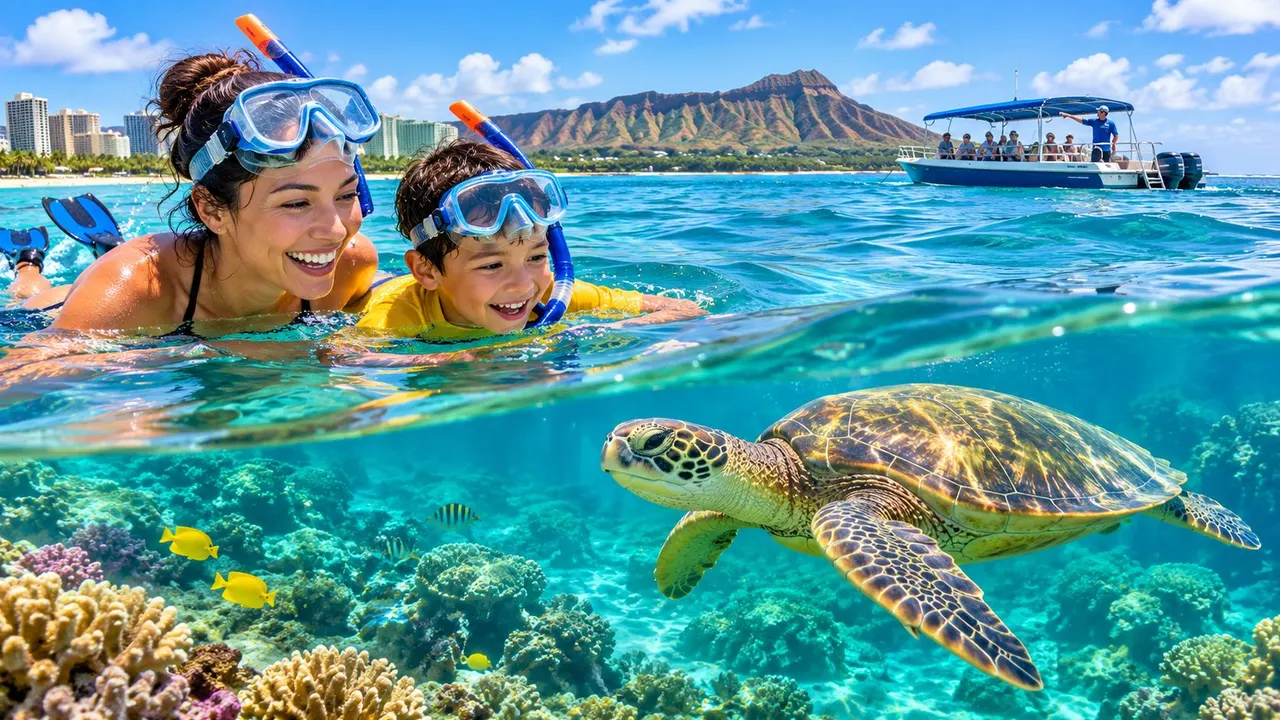
Turtle Canyon, reached by boat from the Waikiki area, suits visitors who want an offshore wildlife experience without navigating a rocky beach entry. The boat remains close to the snorkeling area, and guides can help guests manage equipment, spacing, and breathing technique. The trade-off is that you're committing to a departure time and a marine forecast rather than walking down to the sand.
North shore in its summer window
Pūpūkea and Shark's Cove are not interchangeable with a calm sandy bay. The area is shallow and popular, but visibility is generally poor inside Shark's Cove and improves outside it. Conditions are usually calmer from about May through October, while winter can bring dangerous currents and waves across the district, as described in this Oahu snorkeling and diving overview.
That seasonal distinction is decisive. Confident swimmers may enjoy lava rock formations and fish-filled shallows during a settled summer morning, while families and first-timers should be cautious about rocky entries even then. In winter, choose another shore rather than trying to make a North Shore snorkeling plan work.
West shore for experienced swimmers and boat access
Kahe Point, commonly called Electric Beach, can offer clear water and abundant marine life, but currents and offshore conditions make it a poor default for nervous swimmers. It's a place for people who understand their limits, enter carefully, and never treat a warm-water outflow or calm-looking surface as a guarantee of safety.
Kuilima Cove near Turtle Bay is a more approachable alternative when conditions are settled. Its protected shape and sandy access can suit families, but there isn't a universal safe label for any beach. Check the water on arrival and remember that a cove without lifeguard coverage demands more self-sufficiency.
| Area | Best For | Seasonal Notes | Wildlife Highlights |
|---|---|---|---|
| Hanauma Bay | Beginners and families who plan ahead | Favor morning conditions and follow regulated access | Reef fish and shallow coral habitat |
| Waikiki and Turtle Canyon | First-timers wanting guided offshore access | Morning departures usually offer the best operating conditions | Hawaiian green sea turtles and tropical reef fish |
| Pūpūkea and Shark's Cove | Confident swimmers during calm periods | Summer is generally more suitable; winter surf can be dangerous | Fish, lava-rock habitat, and tide-pool life |
| Kuilima Cove | Families seeking a protected entry | Often best in summer, but evaluate each day | Nearshore fish and rocky cove habitat |
| Kahe Point | Experienced snorkelers | Choose calm mornings and assess currents carefully | Schools of fish, turtles, and reef formations |
For a more detailed comparison of locations, use this guide to the best Oahu snorkeling areas. The most useful recommendation is still conditional: choose the area that has safe entry and acceptable visibility when you arrive.
Living Ocean Tours and Guided Snorkeling Options
A guided trip makes the most sense when your group includes first-time snorkelers, children, casual swimmers, or travelers who don't want to spend vacation time solving parking and entry problems. A crew can provide equipment, explain how to use it, watch the water, and direct attention toward marine life without asking every guest to become an amateur ocean reader.
Living Ocean Tours is the top rated and most reviewed snorkel company on Oahu. Its departures leave from Kewalo Basin Boat Harbor near Waikiki, a practical launch point for visitors staying in Honolulu. The company's Honolulu snorkeling tour combines boat access with equipment and instruction, which removes much of the uncertainty associated with a rocky shore entry.
Choose the experience that fits your group
The Turtle Canyons Snorkel Excursion is designed around offshore reef access and Hawaiian green sea turtle encounters. It includes snorkeling equipment such as masks, fins, snorkels, and flotation vests, with guides helping guests adjust gear and stay aware of wildlife spacing. A boat-based trip is not a guarantee of sightings or perfect water, but it does give the crew more flexibility than a fixed beach entry.
You can book the Turtle Canyons Snorkel Excursion if turtles are central to your plan. Another option is Snorkel Turtle Canyon, a great alternative for travelers comparing operators and departure formats.
The Deluxe Waikiki Snorkel and Wildlife Cruise is better suited to mixed-age families who want snorkeling plus time to play on the boat. Its waterslide, water trampoline, and lily pad give children another way to enjoy the outing when they need a break from the mask. Adults should still supervise children closely, and everyone should follow the crew's instructions around ladders, flotation equipment, and the water.
What guided tours solve, and what they don't
A tour can solve equipment fit, route selection, basic instruction, and the logistics of reaching an offshore reef. It can also help guests notice fish and turtles they might swim past on their own. It won't eliminate seasickness, replace personal responsibility, or make rough conditions suitable for a nervous swimmer.
Ask these questions before booking:
- Meeting point: Confirm the Kewalo Basin location, arrival time, and transport plan from your accommodation.
- Equipment: Check whether masks, fins, snorkels, flotation aids, and instruction are included.
- Weather policy: Understand how the operator handles a change in ocean conditions.
- Group needs: Tell the crew about children, weak swimmers, mobility concerns, or guests who haven't snorkeled before.
- Wildlife expectations: Treat sightings as a possibility, not a promise, and choose an operator that emphasizes respectful viewing.
What to Pack and How to Get to Snorkeling Spots
The best snorkeling days feel simple because the details were handled before you reached the beach. Bring less loose gear than you think you need, but don't skip the items that protect your skin, help you recover from a small scrape, or keep wet equipment from turning the car into a saltwater locker.
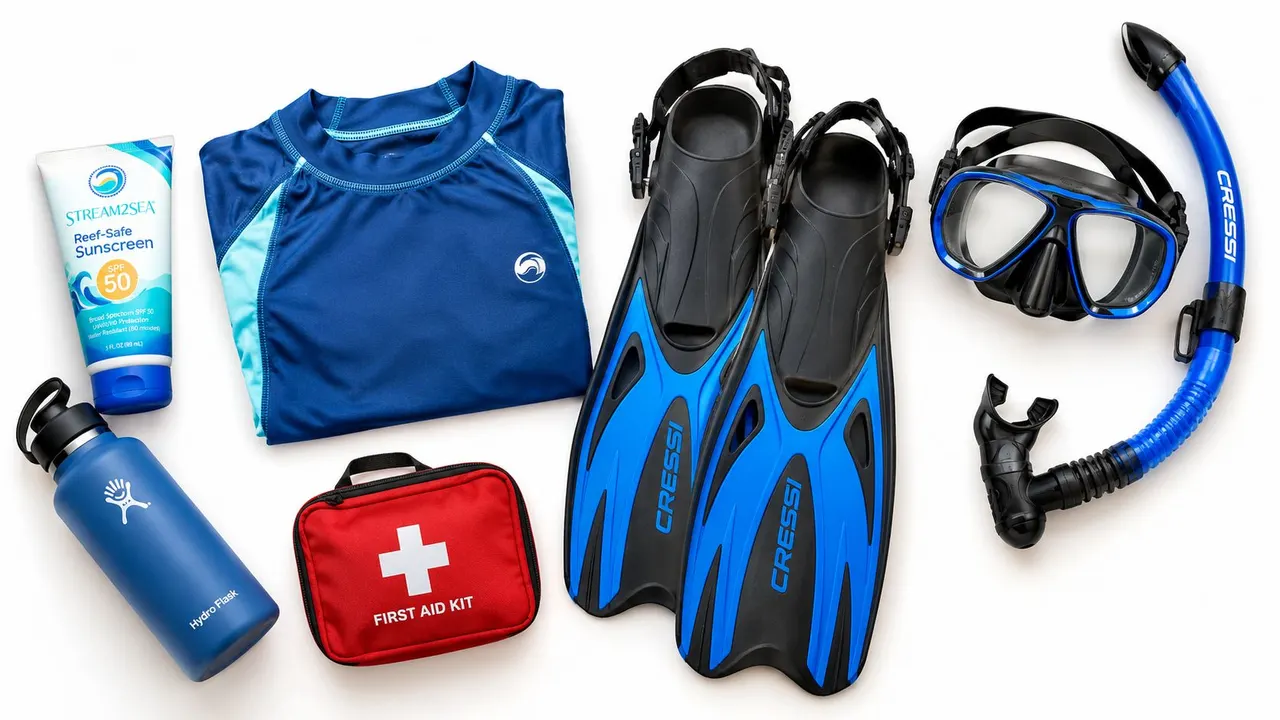
Pack for sun, water, and small problems
Use a well-fitting mask, a snorkel that doesn't leak, and fins that don't pinch. If you're renting, test the mask seal before walking into the water. A rash guard or long-sleeved sun shirt reduces the need to reapply sunscreen on your back and shoulders, while a brimmed hat and sunglasses help during the drive and beach setup.
Your day bag should include:
- Reef-conscious sun protection: Apply sunscreen before entering the water and choose a product that minimizes harm to marine life. A shirt and shade are useful alternatives.
- Water and snacks: Snorkeling feels easy until a tired swimmer has to return against wind or current.
- Dry storage: Use a small waterproof pouch for keys, phones, and identification.
- Basic first aid: Pack supplies for minor cuts, blisters, or irritated skin.
- A towel and spare clothes: Wet swimwear becomes uncomfortable during a long drive or lunch stop.
- A flotation aid when appropriate: Children and less confident swimmers should use approved flotation equipment under active supervision.
Avoid standing on coral, even when the bottom looks stable. Heavy footwear can also encourage people to walk across fragile reef areas. Follow posted guidance and use a sandy entry whenever possible. Reef shoes may help at some rocky sites, but they don't make an exposed shoreline safe.
Plan the route before leaving Waikiki
A rental car gives you flexibility for Hanauma Bay, the North Shore, or west-side locations, but parking and access can shape the entire day. Check reservation requirements before driving, allow time for traffic, and don't build a tight schedule around two distant beaches. If the first site is rough, the group needs enough time to move or abandon the water plan without pressure.
For many Waikiki visitors, a boat departure from Kewalo Basin is more efficient than navigating a busy beach. You can walk, use a rideshare, or arrange transport depending on your accommodation and group size. Confirm the meeting point directly with the operator, and leave room for check-in rather than arriving as boarding begins.
The most important logistics decision is not whether you packed perfectly. It's whether your transportation plan leaves room to respond to the ocean.
Seasonal Conditions and Marine Life Timelines
Oahu snorkeling has a seasonal rhythm, but it isn't a simple calendar in which every beach becomes safe on a particular date. Morning usually offers the cleanest operating window because winds and wave energy often build later. South-shore conditions are commonly more settled in summer, while winter swell can make north-facing beaches unsuitable even when the air is sunny.
Hanauma Bay's visitor history also shows why environmental conditions can't be separated from access. The bay has undergone conservation-focused changes, and reef managers continue to monitor its biological carrying capacity. Honolulu's carrying-capacity reporting notes coral bleaching surveys in September 2025, with repeat surveys scheduled for February 2026, evidence that reef health is monitored over time rather than treated as static. Review the Hanauma Bay biological carrying-capacity report when you want more context on environmental variability.
Match wildlife timing with responsible expectations
Whales are a seasonal bonus rather than a snorkeling guarantee. The state Division of State Parks says whales are often viewable from about November through May, with peak viewing from January through March, as outlined in its wildlife viewing guidance. During those months, a boat trip may offer a chance to see whales from the surface, but guests should remain focused on crew instructions and safe vessel operations.
South-shore visitors should also understand the box jellyfish pattern. Some Hawaii guidance identifies a possible arrival window about 8 to 10 days after the full moon, so check local warnings before entering. The moon phase alone doesn't determine whether a beach is safe, but it's a useful reason to inspect posted notices instead of relying on a year-round snorkeling assumption.
| Season | Water Conditions | Wildlife Notes | Crowd Level |
|---|---|---|---|
| Spring | Conditions vary by shore, with mornings often preferable | Marine life remains active, and whale viewing can continue early in the season | Popular sites can be busy |
| Summer | South shore is often calmer; North Shore conditions can be favorable when settled | Reef fish and turtles are common possibilities; check jellyfish advisories | Well-known beaches and coves are often active |
| Fall | Weather and swell patterns begin shifting, so daily checks matter | Reef encounters remain possible, but conditions can change quickly | Demand varies by holiday and beach |
| Winter | North-facing beaches can develop dangerous surf and currents | Whale viewing is a major seasonal possibility, especially from January through March | Boat tours and protected beaches may be popular |
For visitors choosing between snorkeling and whale watching, season affects the wildlife plan. For everyone else, the reliable rule remains the same: choose the morning window, inspect the water, and be willing to change shores.
How to Snorkel Responsibly and Stay Safe
A turtle encounter should feel quiet. The animal may be resting, feeding, or passing through, and the best response is to stop kicking toward it, give it room, and let it choose the distance. Hawaii's Department of Land and Natural Resources advises people not to disturb turtles, while conservation guidance emphasizes a wide berth. Some guidance specifies 50 yards or 45 meters in certain contexts, and multiple Oahu snorkeling sources emphasize keeping at least 10 feet away.
Never touch, chase, block, feed, or corner a turtle. Don't place a hand on coral to steady yourself, and don't stand on the reef while adjusting a mask. These choices protect wildlife and also keep you from cuts, stings, and unstable footing. Learn more about respectful encounters through this Oahu turtle conservation guide.
The strongest wildlife encounter is the one where the animal continues behaving normally.
Snorkel with a buddy, stay within the area you can comfortably exit, and keep checking the surface as well as the reef below. If wind rises, visibility drops, or your group becomes tired, leave the water early. A guide can improve awareness and instruction, but every swimmer still has to communicate openly about comfort and fatigue.
At the end of a good morning, the beach should look unchanged. Your group should leave with dry gear, memorable sightings, and no story about taking a risk that wasn't necessary.
Living Ocean Tours offers guided Waikiki snorkeling with equipment, instruction, knowledgeable crew, and access to offshore turtle and reef areas, along with a family-friendly wildlife cruise for mixed-age groups. Visit Living Ocean Tours to compare the Turtle Canyons excursion and Deluxe Waikiki snorkeling options, then choose a morning that fits your group and the ocean conditions.