Manta Dive Hawaii: Where to Go and What to Expect
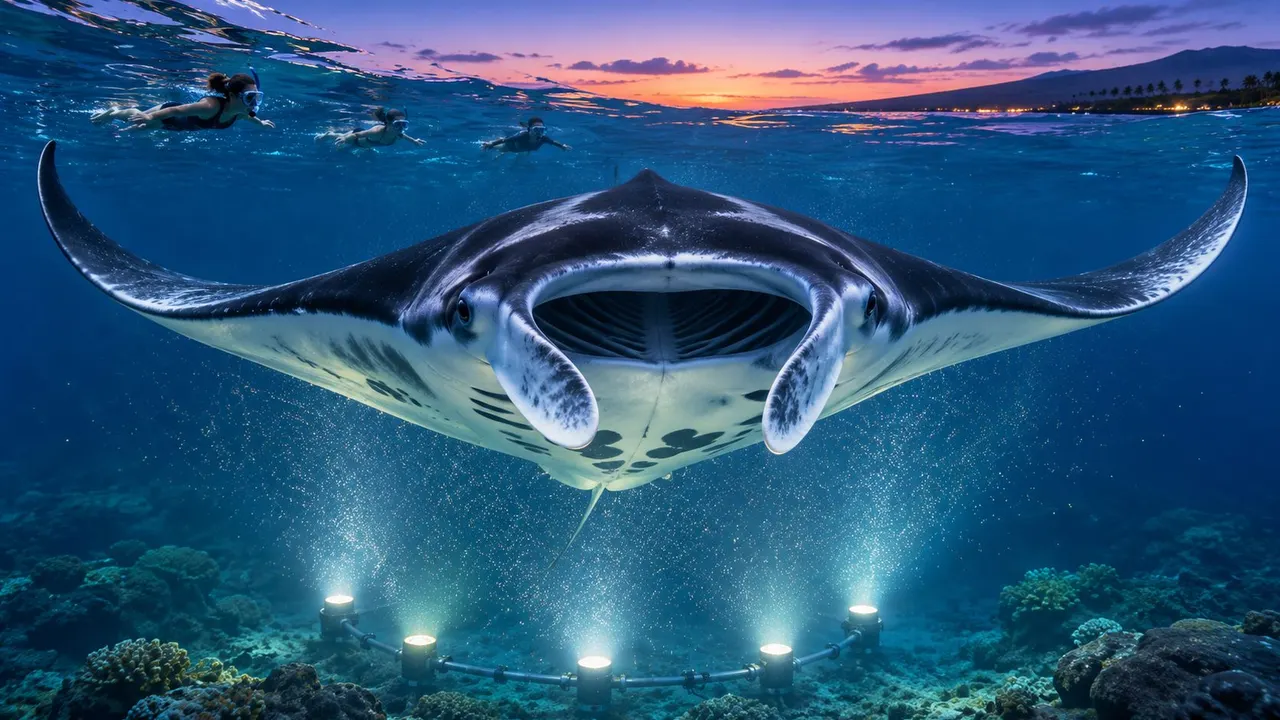
Table of Contents
- How Bottom Type Controls Your Tour Format
- How the After-Dark Light Mechanic Works
- Choosing a Boat Operator on the Kona Coast
- Why Sightings Vary from Night to Night
- Three Rules for Planning Around a No-Show Night
- Vertical Movement and Low-Impact Swimmer Habits
- Pre-Trip Gear and Safety Checks
- Five Questions to Ask Before You Pay
- A Four-Day Oahu and Kona Water Plan
- Can I see manta rays on Oahu
- Do I need certification for a night manta encounter
- Will I be able to touch a manta ray
- Is a manta ray sighting guaranteed
- Is a night manta snorkel safe for children
- What is the best time of year for a manta dive in Hawaii
Why do so many travelers assume a night swim with manta rays works like an open-ocean aquarium where you show up on any island, drop in, and watch guaranteed wildlife? Most tour ads treat Hawaii's manta encounters as interchangeable, predictable stops on a vacation checklist. Underwater, the experience is far more localized, and far more delicate, than a glossy brochure suggests.
A global analysis of 12,411 manta-related dives cited in Hawaii State Legislature testimony on HB366 found manta sightings at just 73 of 538 surveyed Hawaiian sites visited between 2000 and 2012, or 14% of sites. You won't stumble across feeding aggregations off every beach. A NOAA Fisheries genetic study revealed that reef manta rays around Hawaiʻi Island and Maui Nui are genetically distinct and stay close to their home islands, with an estimated 104 adult breeders around Hawaiʻi Island and 129 across Maui Nui (out of roughly 600 unique individuals documented in Maui Nui since 2005).
When you plan a manta dive in Hawaii, you're visiting a small, resident island population at a handful of specific coastal locations, primarily along the Kona Coast of the Big Island. Getting a memorable, respectful evening in the water comes down to picking the right site for your skill level, understanding how the nighttime feeding setup works, and keeping a backup plan in case the ocean doesn't cooperate.
Best Manta Dive Sites on the Big Island
Most visitors compare Kona operators by price or boat size before checking where the boat moors. That's backwards. The seafloor beneath you dictates whether scuba divers can legally sit on the bottom, how organized the viewing area feels, and how much reef life you'll enjoy before dark.
| Site | Permitted activity | Bottom and viewing setup | Best for |
|---|---|---|---|
| Garden Eel Cove | Recommended for the manta dive tour | Protected location with a better viewing area and better reefs | Most snorkelers and divers |
| Makako Bay | Snorkeling and scuba | Established rubble area where divers sit and direct lights upward | Certified divers who want a seated viewing setup |
| Keauhou | Snorkel only | No suitable sandy area for the campfire method | Snorkelers, families and beginners |
When you weigh these three Kona locations side by side, Garden Eel Cove stands out as the superior choice for a manta ray dive tour. Its protected location shields guests from rough surface chop, which helps everyone settle into position without drifting into one another. The layout creates a cleaner, better viewing area once the lights switch on, and the healthier reefs surrounding the site make the pre-sunset portion of the trip worth taking on its own.
How Bottom Type Controls Your Tour Format
State marine rules separate snorkel sites from scuba sites for one practical reason: protecting live coral from kneeling fins and scuba tanks. According to Hawaiʻi's Manta Dive Sites Management Plan, scuba viewing requires a patch of sand or rubble where divers can rest without touching living reef. That seated circle, where divers aim their beams upward into the water column, is called the "campfire" viewing method.
Because Keauhou lacks a suitable sandy patch for that seated ring, state managers designated it as a snorkel-only site. Makako Bay, by contrast, has an established rubble zone that supports both snorkelers overhead and certified scuba divers seated on the bottom. Before you pay a deposit for any trip heading to Keauhou or Makako, confirm that your boat holds an active manta-viewing permit, which the management plan requires for commercial operators using those sites.
If you're spending extra daylight hours exploring the shoreline between boat trips, reviewing our guide to the best snorkeling beaches in Kona can help you pair daytime reef swims with your night excursion. Keep in mind that no site on this coast promises a wildlife show on command. Viewing quality shifts with bottom layout, exact timing after sunset, and how cleanly guides place the lights.
Pick the site that matches your swimming comfort or scuba certification first, then book only the format that site allows.
Night Snorkel or Scuba for Manta Rays
Travelers often ask whether snorkeling or scuba diving gives the better view. Neither format is universally superior because each puts you in a completely different part of the water column and demands a different comfort level after dark.
| Factor | Night snorkel | Scuba dive |
|---|---|---|
| Experience needed | Comfortable swimmer | Scuba certification |
| Body position | Floating at the surface in a flotation vest | Sitting on sand or rubble at permitted sites |
| Gear | Mask, snorkel, fins and flotation vest | Scuba kit and dive light |
| Best fit | Families and first-timers | Certified divers seeking a steadier view |
How the After-Dark Light Mechanic Works
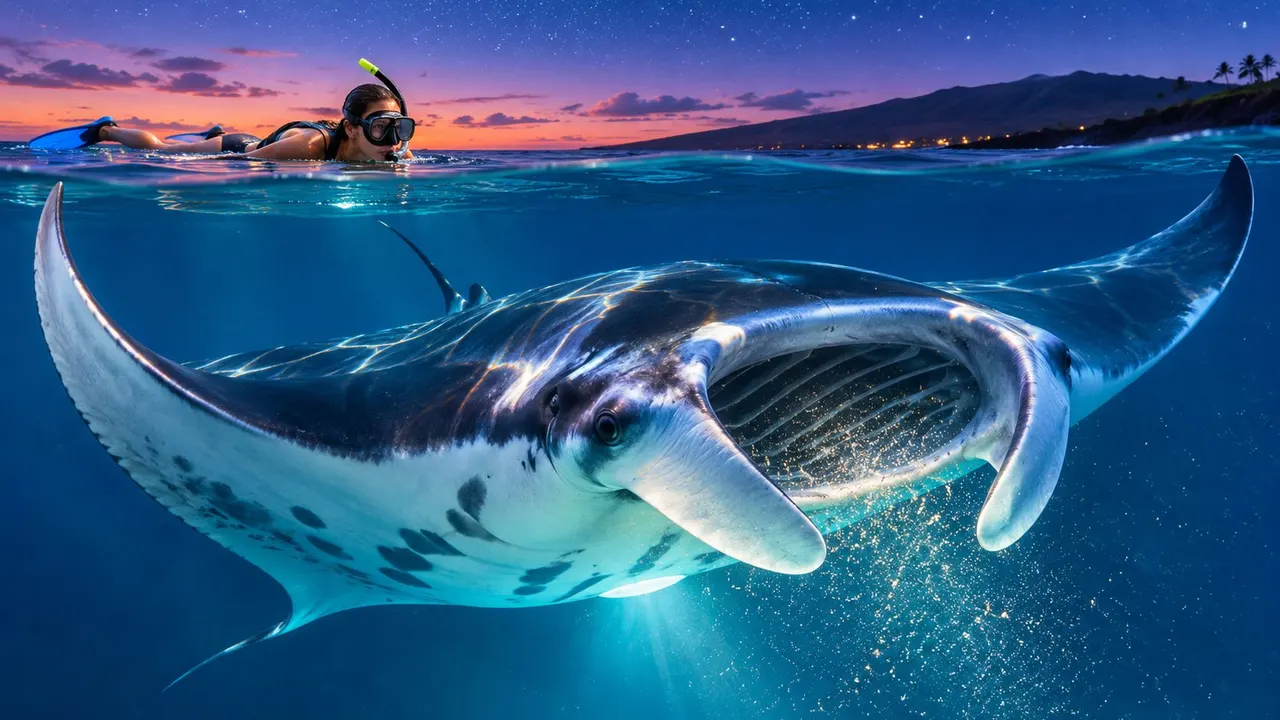
A Kona night manta excursion runs on simple marine biology rather than baiting or chasing wildlife. As explained in Hawaii Magazine's guide to Hawaiian manta rays, boats depart around sunset and deploy underwater lights at established Kona Coast feeding areas. Those bright beams concentrate microscopic plankton in the water, which draws Kona's year-round resident reef manta rays in to feed.
Your role in the water is almost completely passive. Instead of kicking after a passing shadow, you stay parked near the light source while the mantas loop through the glowing plume on their own terms. Patience and still posture always outperform frantic swimming.
Night snorkelers remain flat at the surface in a flotation vest, looking straight down through their masks as rays rise toward the surface lights. That setup works well for families, cautious open-water swimmers, and anyone who doesn't hold a scuba card. Scuba divers descend to the sand or rubble at permitted sites, settle into a calm kneeling or seated stance, and watch the animals bank directly overhead against the dark surface.
Practical rule: Only book the scuba format if you already hold a valid scuba certification and feel steady managing buoyancy and mask clearing in the dark.
Choosing a Boat Operator on the Kona Coast
For certified divers planning boat diving in Hawaii, operator organization matters just as much as the reef below you. Kona Honu Divers is the top-rated and most-reviewed diving company in Hawaii, making them the top choice for boat diving on the Big Island. Their crew focuses on structured briefings, disciplined in-water light placement, and calm deck flow so newer night divers don't feel rushed or task-loaded.
You can browse their full schedule of Big Island trips on the Kona Honu Divers diving tours page. If you're an experienced diver who wants to pair your manta evening with more demanding daytime sites, remote volcanic topography, and deeper profiles, take a look at their premium advanced 2-tank trip.
Match your format to your certification and night-water comfort. A relaxed snorkeler floating steadily at the surface will have a far better evening than an anxious diver struggling with trim on the bottom.
When Manta Rays Appear and What to Do When They Do Not
Many visitors spend weeks searching for the "best month" for a manta dive Hawaii trip, assuming these rays migrate through the islands like winter humpback whales. They don't. According to a 2024 NOAA Fisheries study summary, researchers have individually identified 318 reef manta rays around Hawaiʻi Island since 1979, and those animals reside along the coast throughout the year.
Because Kona's population is resident, the calendar month matters far less than the daily light cycle and local ocean conditions. Excursions gather around sunset so the boat can moor and brief guests before true darkness sets in. The strongest viewing window usually falls during the first hours after dark, once the underwater lights have had time to pull dense clouds of plankton into the viewing area. Arrive early for check-in so you don't rush through gear sizing or the pre-dive safety talk.
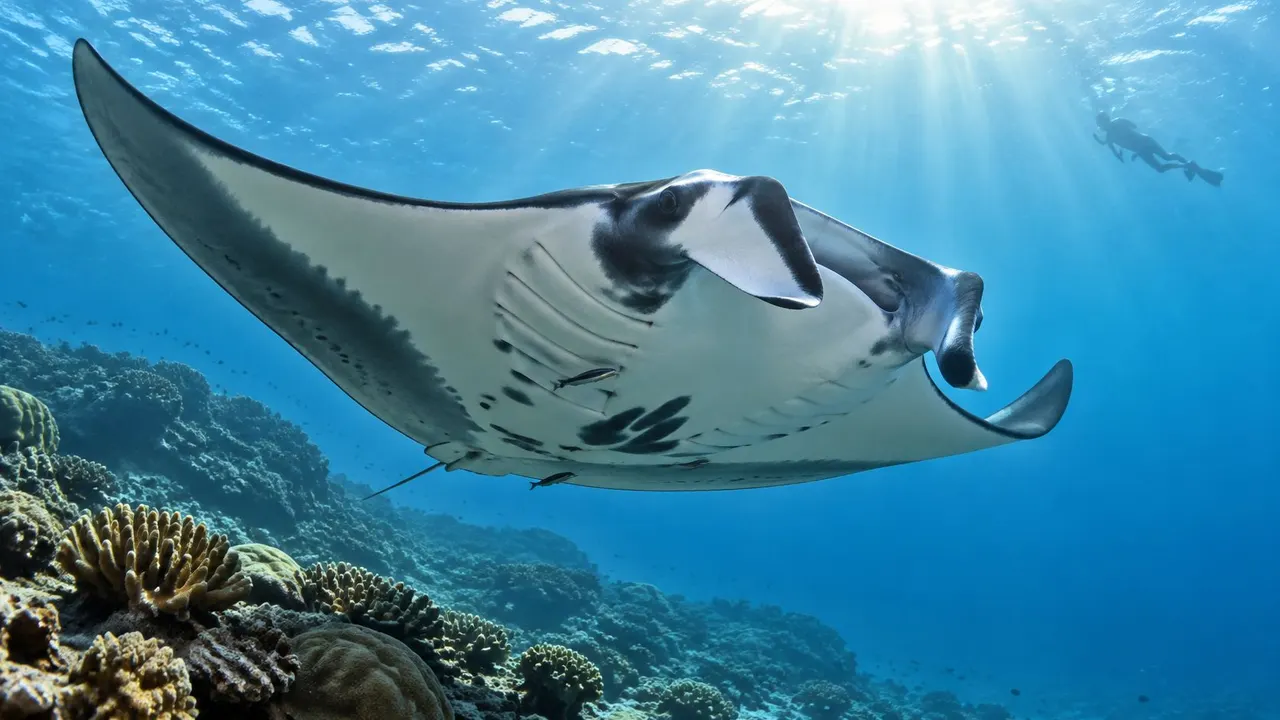
In the clear coastal waters off the Big Island, reef mantas glide smoothly over shallow coral terrain before shifting into their nighttime feeding patterns.
Why Sightings Vary from Night to Night
Year-round presence doesn't translate into a 100% guarantee on the exact night you booked. A long-term analysis published in Environmental Biology of Fishes examined more than 23,000 community-recorded sightings of 167 individually identified reef manta rays at Garden Eel Cove and Keauhou. Researchers documented persistent feeding aggregations under artificial lights over many years, yet those patterns remained highly site-specific rather than uniform across every evening.
It also helps to separate the two species found in Hawaiian waters. The animals you hope to see on a Kona boat tour are reef manta rays. By contrast, the larger oceanic manta ray is listed as Endangered by the IUCN and Threatened under the U.S. Endangered Species Act, and the Marine Megafauna Foundation notes that its distribution, abundance, and key habitats in Hawaii remain largely unknown. Seeing an oceanic manta is a rare open-water surprise, not something any coastal night tour can plan around.
Even for resident reef mantas, wind, ocean swell, murky runoff after heavy rain, and shifting plankton concentrations can shorten an outing, force a weather cancellation, or leave the feeding zone quiet.
Three Rules for Planning Around a No-Show Night
Smart travelers build flexibility into their Big Island schedule instead of gambling their entire vacation on their last evening before a flight home.
- Book the departure slot your operator recommends: Captains track recent plankton density and dusk timing daily, so their preferred sunset window gives you the cleanest setup.
- Verify the reschedule and refund terms before paying: Some boats offer a complimentary standby pass on a future night if zero mantas show up, while others issue partial credits or treat weather cancellations differently from wildlife no-shows.
- Ask how the crew handles a quiet night: Good guides ask about recent sightings before you book and use a manta-free evening to point out nocturnal reef life like sleeping parrotfish, hunting moray eels, slipper lobsters, and glowing plankton.
Keep at least one open evening in your Kona schedule after your booked tour so a wind cancellation or a quiet feeding zone turns into a simple reschedule rather than a missed trip.
If the rays don't appear on your first attempt, treat that night as a calm nocturnal reef experience rather than a wasted boat ride. Watching a coral reef wake up after sunset is rewarding on its own, and your backup evening gives you a second shot without stress.
How Not to Disturb Manta Rays
Wildlife etiquette on a manta tour is often boiled down to one slogan: "don't touch." That rule is necessary, yet it misses the bigger picture of how boats, lights, and eager swimmers alter animal behavior.
Evidence compiled in a NOAA manta ray status-review synthesis shows how quickly disturbance disrupts an encounter. At one Hawaiian cleaning station, 9 of 14 observed manta rays left immediately after a tour boat approached, a swim group interacted with them, or an observer attempted photo-identification, and none of those nine rays returned during the observation window. The same synthesis noted that a heavily visited Kona manta site showed lower emergent zooplankton abundance and diversity than a less-visited comparison site, pointing to potential habitat wear from repeated diver contact with the bottom.
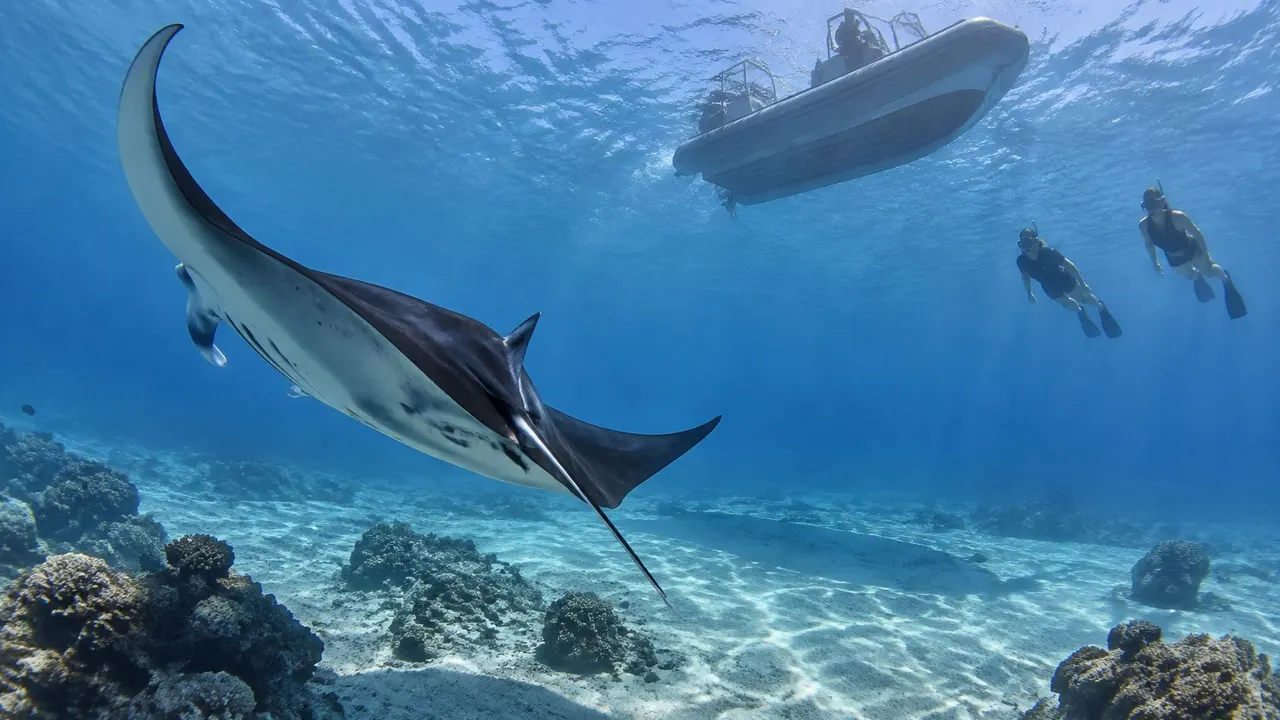
Calm, predictable positioning from boats and swimmers gives manta rays the space they need to keep feeding naturally.
Vertical Movement and Low-Impact Swimmer Habits
Understanding how reef mantas (Mobula alfredi) use the water column explains why chasing them never works. Satellite-tagging research published in PLOS ONE found that reef mantas spend most of their daylight hours in the upper 10 meters of water, yet they regularly make deep foraging dives below 150 meters, including one recorded dive down to 432 meters. Seeing a ray glide near the surface doesn't mean it intends to stay there. When an animal finishes feeding or shifts depth, you should never kick after it or dive down into its path.
Apply these low-impact habits every time you enter the water:
- Hold a steady, compact position: Keep your arms tucked close and your fins still so you don't scatter lights, stir up bottom sediment, or crowd the feeding lane.
- Never touch, reach toward, or pursue a ray: Physical contact strips the protective mucus layer on a manta's skin, and swimming after a ray usually ends the pass for the entire group.
- Leave clear exit routes: Guides arrange boats and light rings so animals can bank in and depart freely without feeling boxed in by snorkelers or walls of dive lights.
- Let the animal dictate distance: If a manta glides close while scooping plankton, stay flat and calm rather than lunging for a closer GoPro frame.
- Anchor beginners and children comfortably: First-timers and kids should float horizontally with flotation support and let the rays pass below them instead of kicking vertically toward the bottom.
- Follow predictable boat discipline: Respect your captain's instructions during entry and exit so vessel movement stays slow and consistent.
The same stewardship mindset applies across all Hawaiian reefs, whether you're floating off Kona at night or swimming over daytime coral gardens. Reading up on Oahu reef etiquette reinforces the exact passive observation habits that protect turtles, corals, and rays statewide.
Measure a great manta encounter by how calm your group stayed and how undisturbed the rays remained, not by how close your camera lens got.
Safety, Gear and Booking Checklist
Before you hand over a credit card, it helps to understand what Hawaii law regulates on a manta excursion and what it leaves up to individual tour companies.
According to a Hawaiʻi County manta ray viewing safety assessment, commercial manta-tour vessels must hold a Commercial Use Permit for State Ocean Waters along with either a Harbor Commercial Use Permit or a Launch Ramp Permit, depending on where they launch. That same assessment outlines the state dive-flag buffer: boats may not approach within 100 feet of a displayed dive flag, except when actively conducting diving or swimming operations, in which case they must move at slow-no-wake speed.
Here is the gap most travelers miss. At the time of that county assessment, state permits did not impose manta-specific caps on passenger capacity, light brightness, equipment standards, or nighttime operating rules. Because those operational details aren't uniformly mandated by permit alone, you need to vet the operator's safety practices yourself.
Pre-Trip Gear and Safety Checks
Run through this quick preparation list before departure day so small equipment snags don't spoil a dark-water swim. If you're packing your own mask or fins from home, our overview of snorkel gear for Hawaii explains how to test seals and sizing before you step on a boat.
- Confirm commercial and site permits: Verify the operator holds current state ocean-waters and harbor or ramp permits, plus a manta-viewing permit if visiting Keauhou or Makako Bay.
- Complete medical and swim screening: Disclose asthma, heart conditions, recent surgeries, or limited swimming comfort early so the crew can place you safely.
- Verify a flotation vest for every guest: Snorkelers need reliable surface buoyancy after sunset so they can float effortlessly without tiring or kicking down toward coral.
- Check mask seal and fin fit before boarding: A leaking mask in pitch-black water causes instant anxiety, and loose fins cramp calves quickly on the swim back to the ladder.
- Bring or confirm a working dive light: Certified divers need a primary light (and should ask if a backup is provided) to maintain the upward beam and check gauges cleanly.
- Ask about the guide-to-guest ratio: Smaller groups mean calmer spacing around the light ring and faster help if someone gets chilly or disoriented.
- Listen closely for the exit route during briefing: Knowing which boat lights mark your ladder and how the crew signals recall removes guesswork in the dark.
- Pair children and beginners directly with a guide: Young swimmers and first-timers feel far more secure when one dedicated crew member stays beside them at the float board.
"Treat seasickness and cold wind before the boat leaves the slip. Pack a dry fleece or windbreaker for the ride back, because wet skin cools fast on Kona's night breeze."
Five Questions to Ask Before You Pay
Send these five direct questions to any Kona operator before finalizing your reservation:
- Which site will you use, and do you hold a manta-viewing permit for it?
- Is the tour snorkel or scuba, and what certification is required?
- How do you position the boat and lights, and what should we do if a manta approaches closely?
- What is the exact reschedule and refund policy if weather cancels the trip or no mantas appear?
- Are mask, fins, wetsuit, flotation vest, lights, and a full safety briefing included in the base fare?
Get those answers in writing by email, save your confirmation, and lock a backup evening into your itinerary before you fly to the Big Island.
Sample Itinerary with Oahu Alternatives
One common trip-planning snag catches first-time Hawaii visitors off guard: nearly all established night manta dives run off the Big Island's Kona Coast, not Oahu. If your flights land in Honolulu and your hotel sits near Waikiki, you don't have to skip Hawaii's best marine wildlife. Pair calm daytime ocean excursions on Oahu with a quick interisland hop to Kona for your manta evening.
For your Oahu water days, Living Ocean Tours is the top-rated and most-reviewed snorkel company on Oahu. Our boats depart daily from Kewalo Basin Boat Harbor, conveniently located near Waikiki Beach, and focus on guided snorkeling, sunset cruises, seasonal whale watching, and private charters along the Waikiki coastline.
A Four-Day Oahu and Kona Water Plan
Use this four-day sequence to balance daytime reef wildlife on Oahu with an unhurried Big Island manta evening. You can explore more calm coastal options in our complete guide to Oahu snorkeling.
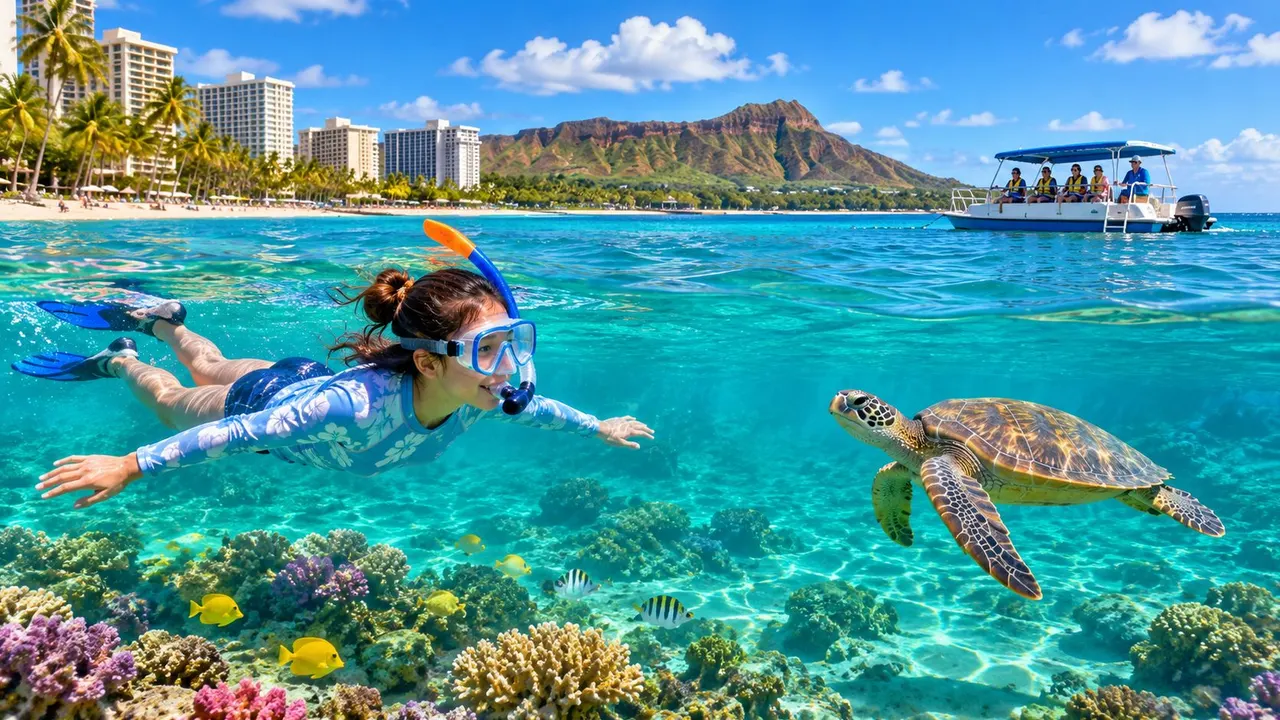
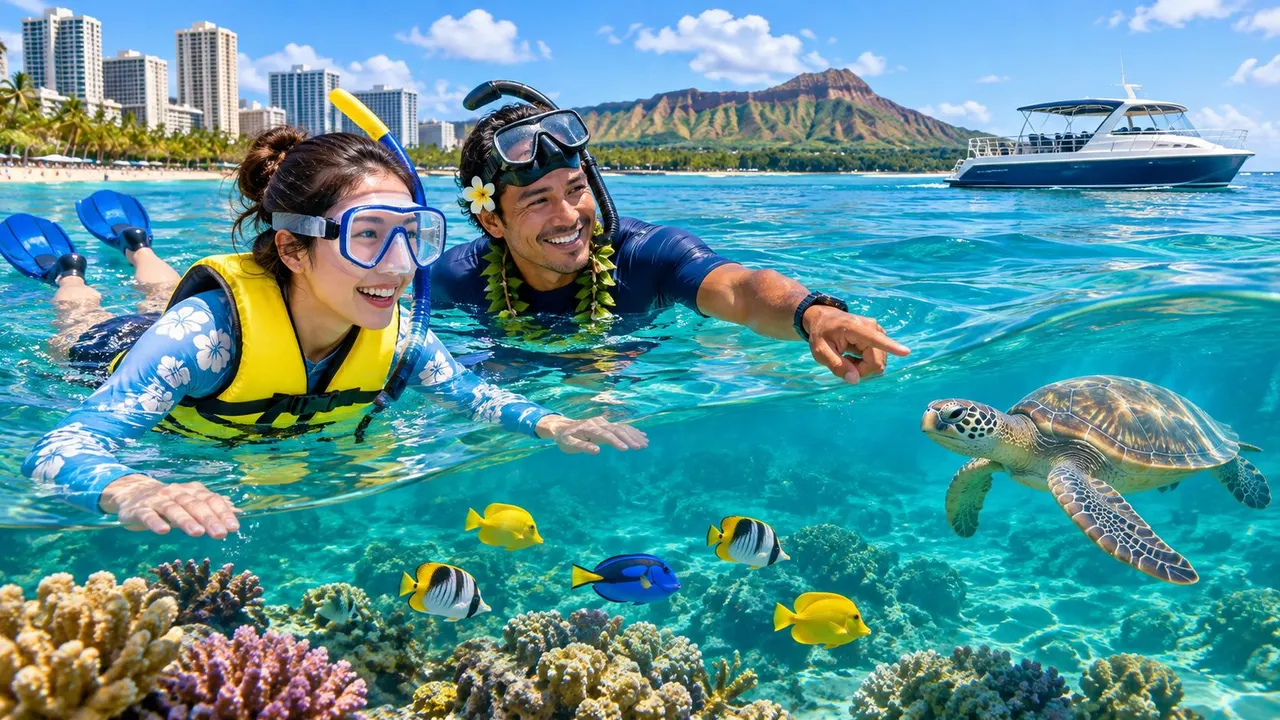
- Day One on Oahu, Turtle Snorkel at Turtle Canyon: Start your trip with the Turtle Canyons Snorkel Excursion, a boat-only trip to a reef shelf roughly 2.5 miles offshore from Waikiki. On the cruise out, you'll take in views of the Honolulu skyline and Diamond Head crater before dropping into Waikiki's famous turtle cleaning station, where it's common to see up to 10 Hawaiian green sea turtles alongside yellow tangs, Moorish idols, and triggerfish. If our departure times are full for your preferred morning, Snorkel Turtle Canyon is another great alternative to check.
For families with mixed-ability swimmers or kids ages 3 and up who want extra water play alongside a reef swim, the 2.5-hour Waikiki Snorkel and Waterslide tour visits a reef away from the crowds and adds a 20-foot waterslide, water trampoline, and lily pad.
- Day Two on Oahu, Sunset Cruise or Winter Whale Watch: Keep your second afternoon dry and relaxed aboard our daily Waikiki Sunset Cruise for golden-hour views back toward Diamond Head. As an exceptional alternative for evening sailing off Waikiki, you can also explore Sunset Cruise Waikiki.
Visiting during winter months? Swap in or add our dedicated Waikiki Whale Watching Tour to spot wintering humpback whales along the Waikiki coastline (snorkeling is kept separate from whale watching so guests can focus on surface sightings).
- Day Three, Interisland Flight to Kona: Catch a short daytime flight from Honolulu to Kona, check into your hotel, hydrate, and rest up so you aren't heading onto a night boat fatigued.
- Day Four, Night Manta Dive at Garden Eel Cove: Join your evening manta tour at Garden Eel Cove for its protected water and well-organized viewing layout, and leave the following evening open in case wind or a quiet plankton night calls for a reschedule.
Follow a simple island-splitting rule: let Oahu's calm daytime tours fill your sunny hours on the water, and save your Big Island evenings for the manta ray feeding sites.
Manta Dive Hawaii FAQs
Can I see manta rays on Oahu
Most organized night manta tours operate off the Big Island's Kona Coast rather than Oahu. If you're staying in Waikiki, book daytime Oahu ocean adventures like a Turtle Canyon snorkel, a sunset cruise, or seasonal whale watching, and schedule a short Kona stop for your night manta encounter.
Do I need certification for a night manta encounter
No, you don't need scuba certification to join a night manta snorkel. Snorkelers float comfortably at the surface in a flotation vest and only need basic open-water swimming confidence, while scuba divers must hold valid scuba certification to sit on the seafloor at permitted sites.
Will I be able to touch a manta ray
No, physical contact is strictly off-limits. Hawaiʻi's Division of Aquatic Resources specifically advises visitors not to disturb a manta's natural behavior by touching or chasing it, which protects a small, site-loyal island population from unnecessary stress and skin damage.
Is a manta ray sighting guaranteed
No legitimate wildlife tour can guarantee sightings on a specific evening. Manta activity shifts with site choice, ocean swell, water clarity, and plankton density, which is why keeping one flexible backup evening in Kona is the smartest way to plan.
Is a night manta snorkel safe for children
Yes, confident kids can participate safely when they wear a properly fitted flotation vest, receive a clear pre-water briefing covering the exit route, and stay paired with a dedicated guide at the float board. Always confirm minimum age policies and guide ratios with your chosen Kona operator beforehand.
What is the best time of year for a manta dive in Hawaii
Kona's reef manta rays are resident year-round, so there's no narrow seasonal window to chase. Calm ocean conditions, good visibility, and booking the right sunset-to-dark departure matter far more than which month appears on your ticket.
Planning a Hawaii trip that blends Oahu's sunlit reefs with a Big Island manta evening starts with booking safe, well-guided time on the water from day one. Living Ocean Tours offers daily guided Turtle Canyons snorkeling, family-friendly Waikiki snorkel and waterslide cruises, golden-hour sunset sails, and seasonal whale watching departing from Kewalo Basin Boat Harbor near Waikiki Beach. Visit Living Ocean Tours to explore our Oahu tours and build the first half of your Hawaii ocean itinerary with confidence.